
Tiny Whoops are small, lightweight FPV drones where every gram and every parameter matters. On these 65mm and 75mm 1S platforms, motor choice directly shapes throttle response, stability, efficiency, and overall flight feel. With the growing variety of stator sizes, KV options, and structural designs, understanding how different motors behave is the key to building a whoop that flies the way you want.
This guide breaks down the core factors that influence Tiny Whoop motor performance and highlights nine of the most trusted options on the market. Whether you prefer indoor racing, smooth cruising, or mixed-environment flying, you’ll find clear insights to help you pick the right motor for your build.
What is a Tiny Whoop Motor?
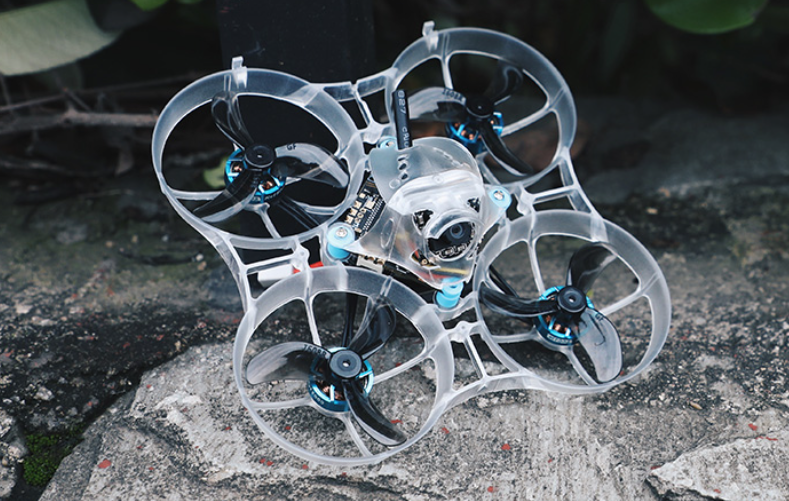
A Tiny Whoop Motor typically refers to a micro brushless motor designed specifically for 65–75mm Whoop platforms. These motors take extreme lightweighting and high RPM as their core goals and primarily operate under 1S voltage conditions. They are a critical component of Tiny Whoop flight performance. Because the airframe size, battery capacity, and propeller specifications are all strictly limited, the role of the motor on this platform is significantly magnified, and its performance orientation differs markedly from conventional FPV motors.
1. Introduction to Tiny Whoop Motors
From a design positioning perspective, a Tiny Whoop Motor is not simply a scaled-down brushless motor; it is a re-balancing of dimensions, weight, and output characteristics for the micro platform. They typically use smaller stator specifications and utilize high KV values to generate sufficient RPM at low voltage, compensating for the lack of thrust area. The bell (housing) and bearing structures also prioritize lightweight design. Mounting specifications are highly unified, with most adopting 3×M1.4 screws and a hole spacing standard of approximately 6.6mm, ensuring good compatibility across different frame brands.
2. Structural Characteristics of Tiny Whoop Motors
Constrained by volume and weight, Tiny Whoop motors are highly streamlined structurally. Rotors typically use lightweight magnets, and windings use ultra-fine enameled wire to reduce rotational inertia and improve response speed. Motor bells often feature an open structure, which not only helps reduce weight but also improves cooling conditions to a certain extent.
In such small motors, the quality of dynamic balance is particularly important. Slight deviations in the rotor or shaft will be amplified at high RPMs, directly affecting vibration performance and attitude stability during flight. Therefore, even within the same specifications, differences in consistency between brands or batches can result in noticeably different flight experiences.
3. Performance Characteristics of Tiny Whoop Motors
The performance characteristics of a Tiny Whoop Motor stem primarily from the natural limitations of 1S voltage. Under low voltage conditions, the motor must rely on a higher KV value to achieve sufficient RPM. This usually makes the throttle response more direct, but it also makes the system more prone to heat generation and RPM sag (drop). Meanwhile, the small volume stator has limited thermal capacity under continuous high load, placing higher demands on efficiency and heat dissipation.
The weight factor is also exceptionally sensitive on micro platforms. For a 65mm class airframe, a motor weight increase of even 0.1g can alter the overall throttle feel, hover stability, and flight time. Additionally, the inertia of micro propellers has a more pronounced effect on the power system; high-frequency control maneuvers rely heavily on the motor's transient response capability. Once there is insufficient consistency among the four motors—especially in high KV configurations—the airframe can easily exhibit subtle jitters on the roll or pitch axes.
4. Use Cases for Tiny Whoop Motors
Based on the characteristics above, Tiny Whoop Motors are widely used in various micro flight scenarios.
65mm platform: Primarily used for indoor racing and technical course flying, demanding extremely high requirements for response speed and weight control.
75mm platform: Maintains agility while offering better stability and torque performance, making it suitable for mixed indoor/outdoor flying and light Freestyle.
Other uses: Tiny Whoops are also commonly used for micro cruising, daily training, and skill practice, which place more balanced requirements on motor durability and consistency.
How to Choose a Tiny Whoop Motor?
On the Tiny Whoop platform, there is no universal "optimal solution" for motor selection. Because the airframe size, battery specifications, and flight environment are highly restricted, different parameter combinations often correspond to completely different handling orientations. Understanding the relationships between various parameters is more important than simply comparing thrust or KV numbers.
1. How to Choose Motor Stator Size?
Stator size is one of the core factors determining the output characteristics of a Tiny Whoop motor.
Smaller stators (e.g., 0702): Possess extremely low rotational inertia, allowing them to build up RPM rapidly when the throttle changes. They are perfectly suited for indoor racing scenarios pursuing ultimate response. However, correspondingly, their continuous output capability and load resistance are limited, requiring higher precision in flight lines and throttle control.
Mid-size stators (e.g., 0703. 0802. 0803): As stator height or diameter increases, the motor's torque and stability gradually improve, the throttle curve becomes more linear, and the margin for error increases. Among these, 0802 is often regarded as the universal specification balancing response and stability, while 0803 is better suited for 75mm airframes or flight orientations leaning towards Freestyle.
Larger stators (e.g., 1002): The motor begins to clearly lean towards a "power" type, emphasizing support capability in the low-to-mid throttle range.
2. How Does KV Value Affect Flight Experience?
On a 1S platform, the KV value directly determines the motor's RPM potential at a given voltage.
High KV settings: Usually bring more direct throttle response and stronger burst power, suitable for racing environments requiring frequent acceleration and deceleration. However, such configurations place higher demands on battery performance and cooling conditions, and are more prone to heat or voltage sag under continuous high loads.
Mid-range KV intervals: Strike a better balance between response speed and efficiency. The flight feel is relatively natural, covering the widest range of applications.
Low KV settings: While rarer in 1S Whoops, they can provide smoother, more controllable output characteristics when paired with larger propellers or heavier airframes.
3. What is the Impact of Weight on Tiny Whoop Motors?
On Tiny Whoop class airframes, weight is not an abstract parameter but a tangible factor directly affecting the handling experience. Tiny changes in motor weight alter the overall inertia distribution and throttle response rhythm. For a 65mm platform, an overly heavy motor will weaken its agility advantage; whereas in configurations requiring higher torque, a moderate increase in weight may actually trade for more stable power performance.
Therefore, lighter is not always better; weight should be considered in conjunction with stator size, KV settings, and the intended use of the airframe.
4. The Role of Current and Power Indicators
The current and power parameters marked on a motor mainly reflect its load-bearing capacity and instantaneous output upper limit. Higher peak current usually means stronger burst power, but it also places higher demands on the battery and Flight Controller (FC) power supply. In a 1S system, this is particularly critical; an unreasonable pairing may lead to sudden voltage drops, counterintuitively weakening actual performance.
For high KV or large stator motors, paying attention to current characteristics helps judge whether they are suitable for sustained high-load flight or only for short-burst scenarios.
5. Influence of Wires and Connection Methods
While cable length and wire gauge do not directly determine performance, they affect installation convenience and flight reliability. Wire that is too short may limit wire routing space, while wire that is too long is prone to introducing vibrations or contact interference during flight. Common connection methods include bare wire soldering and JST plugs; each has trade-offs and should be chosen based on the flight controller interface and maintenance habits.
6. How to Choose Bearing Types?
The bearing structure is a key factor affecting motor smoothness and durability.
Single Bushing (Copper Sleeve): Lighter weight and lower cost, but more prone to wear after long-term use.
Double Ball Bearing: Provides more stable axial support, runs smoother, and is more beneficial for vibration control and consistency. For pilots pursuing control precision and long-term stability, bearing quality is often more worth attention than on-paper thrust data.
7. Common Tiny Whoop Selection Misconceptions
On the Tiny Whoop platform, the impact of parameter changes on flight feel is significantly magnified, so some intuitive judgments often fail to yield ideal results.
Over-pursuing High KV: This is the most common issue. High KV improves response, but under 1S conditions, it significantly increases power supply stress. If battery performance is insufficient, it easily leads to RPM drops and unstable rhythm.
Judging Performance Solely by Thrust Tables: Static data is easily distorted. Micro platforms value transient response, consistency, and low-to-mid throttle control more; peak thrust does not directly represent flight feel.
Blindly Choosing Larger Stator Sizes: This may weaken agility. For a 65mm airframe, the extra weight and inertia often reduce response speed, which is detrimental to indoor racing and course flying.
Ignoring Motor Weight Differences: This is also very common. Even a 0.1g change can affect throttle rhythm and stability; weight should be considered alongside the stator and usage scenario.
TOP 9 Tiny Whoop Motors 2025
After clarifying the core parameter logic and selection criteria for Tiny Whoop motors, choosing specific models is often the most critical step in actual configuration. Based on current mainstream application scenarios for 1S 65–75mm platforms, parameter orientations, and market availability, the following 9 representative Tiny Whoop motor models have been selected. These cover different stator specifications, KV ranges, and performance orientations, serving as reference samples to help readers establish a more intuitive basis for comparison during actual selection.
TOP 9 Tiny Whoop Motors Comparison Table:
Motor Model | Weight (g) | Dimensions (Diameter × Length) | Wire Length | No-Load Current | Peak Current | Max Power | Notes |
BETAFPV 0802SE 19500KV | 1.83–1.9 | 10.5 mm × 13.6–13.8 mm | 33–35 mm | — | 3.7A | 14.8W | Balanced motor, ideal for training fleets |
T-Hobby M0803 22000KV | 2.24 | 10.6 mm × 15.7 mm | 33.5 mm | 0.65A @10V | 5.46A (60s) | 22.6W (60s) | Higher torque, stronger mid-throttle |
Happymodel EX0802 19000KV | 1.6–1.7 | 10.5 mm × 14.9 mm | 27–30 mm | 0.45A @2V | 4.09A | 15.1W | Unibell bell design, durable & lightweight |
Flywoo ROBO 1002 23500KV | 2.4–2.5 | 13.5 mm × 7.75 mm | — | 1.5A @5V | 14A (3S) | 52W (3S) | High-torque motor for 75mm / 2-inch builds |
T-Hobby M0703 19000KV | 1.7 | — | 40 mm | 0.5A @10V | 2.03A (10s) | 7.5W (10s) | Ultra-light, more stable than 0702 |
iFlight XING NANO X0802 22000KV | 2.2 | 11.4 mm × 9.1 mm | 30 mm | 0.7A @10V | 4.18A (60s) | 16.7W (60s) | Aggressive throttle response, high KV |
BETAFPV 0702 27000KV | 1.52 | 9.0 mm × 12.75 mm | 35 mm | — | 3.7A | 14.8W | Extreme lightweight racing motor |
T-Motor M1002 18000KV | 2.4 | — | 40 mm | 0.6A @10V | 5.16A (10s) | 18.7W (10s) | Strong mid-range torque & stable output |
RCINPOWER GTS V3 0802 22000KV | 1.9–1.97 | 11.2 mm × 8.2 mm | — | 0.2A @5V | 5.8A (3S) | 21.5W (3S) | High-efficiency performance-focused motor |
1. BETAFPV 0802SE 19500KV
The BETAFPV 0802SE 19500KV is a general-purpose 0802 motor designed for 1S Tiny Whoop platforms, commonly found in 65mm class airframes like the Meteor65 series. Its parameter settings prioritize efficiency and controllability, making it suitable for daily flying, training, and stability-oriented configurations. It is one of the most frequently used foundational models in the current 1S Whoop platform.
Specifications:
Applicable Platform: 1S 65mm / 75mm Tiny Whoop
Weight: Approx. 1.83–1.9 g (including wire)
Work Voltage: 1S LiPo
Shaft Diameter: 1.0 mm
Shaft Length: Approx. 5 mm
Mounting Holes: 3 holes
Hole Spacing: 6.6 mm
Screw Spec: M1.4
Dimensions: Approx. 10.5 × 10.5 × 13.6–13.8 mm
Wire Spec: 30AWG
Wire Length: Approx. 33–35 mm
Bearing Type: Brass Bushing (Copper Sleeve)
Peak Current: Approx. 5.46 A
Max Power : Approx. 22.6 W
Reason for Recommendation:
The advantage of the 0802SE 19500KV lies in its stable, balanced, and predictable flight performance. Compared to higher KV or extreme lightweight racing motors, it is much friendlier regarding heat control and battery stress, with minimal change in handling during long flights. Compared to larger stator "power" motors, it better retains the sensitivity and lightness that a 65mm Whoop should have. This makes it extremely suitable as a long-term solution for beginner to intermediate stages, as well as for training drones or fleet applications requiring unified configuration to lower tuning and maintenance costs.
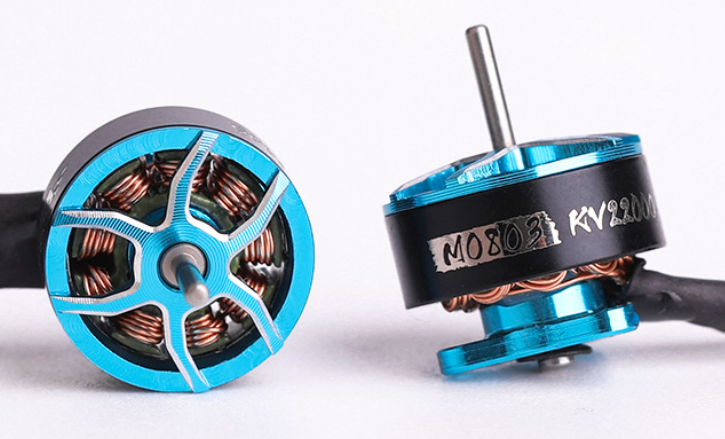
2. T-Hobby M0803 22000KV
The T-Hobby M0803 22000KV is a 1S Tiny Whoop motor based on the 0803 stator specification, positioning itself towards performance. On 65–75mm platforms, compared to the common 0802 specification, it possesses more ample torque reserves and more stable mid-range output performance, making it especially suitable for configuration scenarios where the airframe weight is slightly higher or there is a clear need for "thicker" power.
Specifications:
Applicable Platform: 1S 65–75mm Tiny Whoop
Winding Structure: 9N12P
Work Voltage: 1S LiPo
Weight: 2.24 g
Shaft Diameter: 1.0 mm
Mounting: 3-hole base
Hole Spacing: 6.6 mm
Screw Spec: M1.4
Dimensions: Approx. Φ10.6 × 15.7 mm
No-load Current (10V): Approx. 0.65 A
Internal Resistance: Approx. 122 mΩ
Peak Current (60s): Approx. 5.46 A
Max Power (60s): Approx. 22.6 W
Wire: Length approx. 33.5 mm
Connector: JST-1.25 plug
Reason for Recommendation:
The M0803 22000KV is better suited for pilots wishing to enhance power "thickness" and stability. Compared to 0802 class motors, it offers a more noticeable lifting sensation and load resistance in the low-to-mid throttle range, making it easier to maintain attitude and rhythm, especially on 75mm Whoops or slightly heavier configurations. However, this performance boost also implies higher requirements for battery discharge capability, ESC headroom, and cooling conditions. Therefore, it is more suitable for pilots with some flight experience who explicitly seek stronger power and a more stable feel, rather than those aiming for extreme lightweight or maximum flight time.
3. Happymodel EX0802 19000KV
The Happymodel EX0802 19000KV is an 0802-class 1S motor utilizing a Unibell (integrated bell) structure, primarily aimed at the 65mm Tiny Whoop platform. This model is widely used in airframes like the Mobula6 and Moblite6. It reinforces structural integrity while maintaining lightweight properties, making it suitable for high-frequency flying and daily training scenarios.
Specifications:
Applicable Platform: 1S 65–75mm Tiny Whoop
Configuration: 9N12P
Work Voltage: 1S LiPo / LiHV (19000KV nominally supports 1S)
Shaft Diameter: 1.0mm
Dimensions: Φ10.5 × 14.9mm (Motor diameter × length)
Weight: Approx. 1.6–1.7g (including wire, varies slightly by batch)
Connector: JST-1.25 plug
Wire Length: Approx. 27–30mm (including plug)
Mounting Holes: 3 holes
Hole Spacing: 6.6mm (Standard Whoop 3-hole base)
No-load Current (2V): 0.45 A
Peak Current: 4.09 A
Max Power : 15.1 W
Reason for Recommendation:
The EX0802 19000KV is exceptionally suited for the "high-frequency fly + high-frequency crash" 65mm 1S platform. Relative to higher KV versions like 22000KV / 25000KV, it is easier to control in the lower half of the throttle range and places less stress on the battery and ESC; compared to entry-level 0802 motors, it offers a noticeable improvement in instantaneous torque and response. If your frame is used primarily for indoor cruising or daily training, and you want a power system that is durable enough to avoid frequent motor replacements, this EX0802 19000KV is a robust choice balancing feel, reliability, and cost.
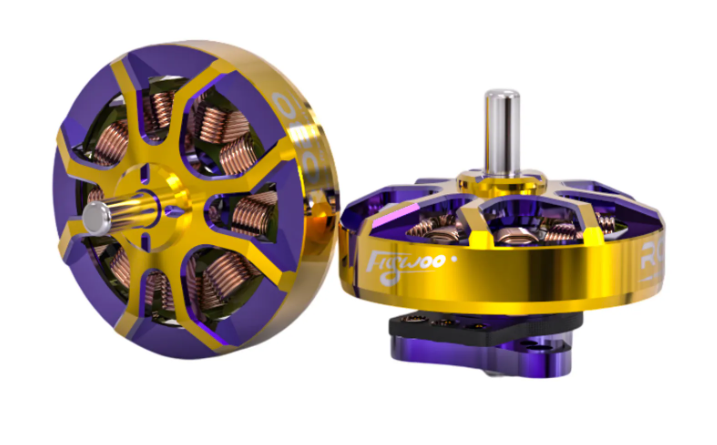
4. Flywoo ROBO 1002 23500KV
The Flywoo ROBO 1002 23500KV is a 1S micro brushless motor based on the 1002 stator specification, positioned towards performance and load capacity. Compared to 0802/0702 class motors, it is better suited for 75mm Whoops or slightly heavier 1S micro platforms—also common in lightweight 2-inch frames—where there are higher demands for power sustainability and structural strength.
Specifications:
Applicable Platform: 1S 75mm Whoop, Lightweight 2-inch toothpick / micro frames
Configuration: 9N12P
Work Voltage: 1S LiPo
Shaft Diameter: 1.5mm (Compatible with 1.5mm bore props)
Dimensions: Φ13.5 × 7.75mm
Weight: Approx. 2.4–2.5g (including wire)
Mounting Holes: 3 holes
Hole Spacing: Approx. 6mm 3-hole layout (M1.4)
No-load Current (5V): Approx. 1.5A
Internal Resistance: Approx. 75mΩ
Max Continuous Power: Approx. 52W (3S test data)
Max Current: Approx. 14A (3S test data)
Max Efficiency Current: Approx. 2–4A, Efficiency >84%
Reason for Recommendation:
The ROBO 1002 23500KV is better suited for "75mm / 2-inch + High Load" power configurations. Under the same voltage conditions, it possesses stronger torque reserves and mid-range support compared to 0802 / 0702. making it suitable for 1S airframes carrying slightly heavier batteries, canopies, or lightweight video transmission modules. The high KV combined with a larger stator cross-sectional area also places higher demands on battery discharge capability and overall cooling. Therefore, it is more suitable for pilots who explicitly pursue strong power performance and are willing to invest effort in batteries and tuning, rather than for extreme lightweight or purely slow indoor cruising scenarios.
5. T-Hobby M0703 19000KV
The T-Hobby M0703 19000KV targets ultra-lightweight 1S Tiny Whoop platforms, utilizing a 0703 stator specification to strike a relative balance between weight control and output stability. This model is commonly used in 65mm class airframes, suitable for lightweight configurations that wish to maintain sensitive handling while obtaining more secure power support than an 0702.
Specifications:
Applicable Platform: 1S 65mm Tiny Whoop, Ultra-light 1S Micro Drones
Configuration: 9N12P
Work Voltage: 1S LiPo
Shaft Diameter: 1.0mm
Mounting Holes: 3 holes
Hole Spacing: 6.6mm (3-hole M1.4)
Weight: Approx. 1.7g (including wire)
Wire Length: Approx. 40mm
Connector: JST-1.25 3Pin
No-load Current: Approx. 0.5A @ 10V
Peak Current (10s): Approx. 2.03A
Max Power (10s): Approx. 7.5W
Reason for Recommendation:
For 65mm players wishing to further compress airframe weight and pursue agile handling, the M0703 19000KV offers an option sitting between "0702 extreme lightweight" and "0802 slightly heavier but more stable." While maintaining extremely low motor weight, it brings more reliable attitude support than an 0702. suitable for lightweight racing, indoor cruising, or ultra-light video transmission platforms. However, in terms of full-load output and resistance to rough flying, it still falls short of larger stator models like 0802 / 1002. so it is better suited for users with relatively "gentle" flight environments and operating habits.
6. iFlight XING NANO X0802 22000KV
The iFlight XING NANO X0802 22000KV belongs to the XING NANO series of micro high-KV motors. It is primarily aimed at ultra-light toothpick and micro platforms but is also used in 65–75mm class airframes like the Alpha A65 and Baby Nazgul Nano. This model supports 1–2S voltage input, emphasizing burst power and high RPM performance, suitable for performance-oriented micro configurations.
Specifications:
Applicable Platform: 1S–2S 65/75mm Whoop, Ultra-light toothpick / micro platforms
Configuration: 9N10P
Work Voltage: 1–2S LiPo
Shaft Diameter: 1.0mm
Dimensions: Approx. 11.4 × 9.1mm (Motor diameter × length)
Weight: Approx. 2.2g (including wire)
Mounting: 3-hole mounting, M1.4 screws
Wire Length: Approx. 30mm
Connector: JST-1.25 3Pin
No-load Current(10V): 0.7A
Peak Current (60s): Approx. 4.18A
Max Power (60s): Approx. 16.7W
Reason for Recommendation:
The XING NANO X0802 22000KV is better suited for pilots who are already familiar with the feel of high KV flight and wish to obtain stronger burst power and rapid throttle response on ultra-light toothpicks or 1S / 2S micro platforms. In such configurations, it provides very direct RPM build-up capabilities, beneficial for high-speed gate entries and frequent direction changes. When used on 65mm or 75mm Tiny Whoops, one can similarly obtain more aggressive power performance, but the requirements for battery discharge capability, connector condition, and throttle curve settings are relatively higher. Therefore, this motor is more suitable for a performance-oriented, fast-paced flying style, rather than configurations where flight time or gentle handling is the primary goal.
7. BETAFPV 0702 27000KV
The BETAFPV 0702 27000KV is a high-KV motor designed for extreme lightweight 65mm racing Tiny Whoops, with design goals focused on minimizing weight and maximizing transient response. This series is commonly used in indoor racing and high-tempo flight scenarios, particularly in configurations that are extremely sensitive to airframe weight and throttle response.
Specifications:
Applicable Platform: 1S 65mm Ultra-light Racing Whoop, Indoor Competition Drone
Bearing Type: Double Ball Bearing
Work Voltage: 1S LiPo
Weight: Approx. 1.52g (including wire)
Shaft Diameter: 1.0mm
Shaft Length: Approx. 4.2mm
Mounting Holes: 3 holes
Hole Spacing: 6.6mm
Screw Spec: M1.4
Dimensions: Approx. 12.75 × φ9mm
Wire Length: Approx. 35mm (including plug), 30AWG wire
Peak Current: Approx. 3.7 A
Max Power: Approx. 14.8 W
Reason for Recommendation:
The 0702 27000KV is a typical "Extreme Lightweight + High KV" combination. On a 1S 65mm platform, it can significantly reduce rotational inertia, improve airframe sensitivity, and output extremely high RPM in a short time, making it perfectly suited for short-lap indoor racing and pilots pursuing "Ultra-light + Extreme Feel." However, this type of motor is quite "demanding" regarding flight skill and tuning; a heavy throttle hand can easily cause rapid battery voltage sag, and flight times are usually short. It is best suited as a dedicated powertrain for competition/practice drones, rather than a configuration balancing daily slow flight or long endurance.
8. T-Motor M1002 18000KV
The M1002 18000KV is a 1002 specification 1S micro motor released by T-Motor, mainly applied to 75mm Tiny Whoops and 2-inch class lightweight platforms. Compared to 0802 class motors, it offers more stable power output when the load increases or when using larger capacity batteries, suitable for 1S configurations leaning towards practicality and stability.
Specifications:
Applicable Platform: 1S 75mm Whoop, Lightweight 2-inch FPV / toothpick, Micro Cine drones
Configuration: 9N12P
Work Voltage: 1S LiPo
Inner Shaft Diameter: Approx. 1.5mm
Outer Shaft Diameter: Approx. 1.0mm
Mounting Holes: 3 holes
Hole Spacing: 6.6mm (3-hole M1.4)
Weight: Approx. 2.4g (including wire)
Wire Length: Approx. 40mm
Connector: JST-1.25 3Pin
No-load Current (10V): Approx. 0.6A
Max Power (10s): Approx. 18.7W
Peak Current (10s): Approx. 5.16A

Reason for Recommendation:
For 75mm Tiny Whoops or 2-inch class lightweight platforms, if you wish to use larger capacity batteries, canopied frames, or other additional structures under 1S conditions while still maintaining relatively stable and controllable power output, the M1002 18000KV provides a more ample torque margin than 0802 class motors. Its power characteristics lean more towards mid-range support and linear output rather than the transient burst of extreme high KV, maintaining a consistent flight feel as load increases. Therefore, it is better suited as a practical, load-oriented 1S power upgrade solution, rather than for configurations pursuing extreme lightweight or extreme RPM limits.
9. RCINPOWER GTS V3 0802 22000KV
The RCINPOWER GTS V3 0802 22000KV is a high-performance 0802 motor designed for 1S micro platforms, applicable to 65mm and 75mm Tiny Whoops. This model centers on a higher KV setting and stable output characteristics, commonly found in racing, slalom, and advanced practice scenarios requiring strong power response.
Specifications:
Applicable Platform: 1S 65/75mm Whoop, 1S 1.6-inch toothpick, etc.
Configuration: 9N12P
Work Voltage: 1S LiPo
Shaft Diameter: 1.0mm
Dimensions: Approx. Φ11.2 × 8.2mm
Weight: Approx. 1.9–1.97g (including wire)
Mounting Holes: 3 holes
Hole Spacing: 6.6mm (3-hole M1.4)
No-load Current (5V): Approx. 0.2A
Max Continuous Power: Approx. 21.5W (3S condition)
Internal Resistance: Approx. 117mΩ
Max Current: Approx. 5.8A (3S condition)
Best Efficiency Current: Approx. 1–2A, Efficiency >82%
Reason for Recommendation:
The GTS V3 0802 22000KV leans towards a compromise of "Strong Power + High Efficiency." On 1S 65/75mm platforms, it can provide stronger burst and climbing capability than 19000KV / 19500KV motors. At the same time, thanks to lower no-load current and good efficiency, flight time does not degrade severely provided the battery and propellers are matched reasonably. For pilots who are already familiar with the 0802 platform and wish to obtain more punchy mid-to-high throttle in racing, slalom, or high-intensity practice—without moving up to larger stator configurations like 1002 / 1103—the GTS V3 0802 22000KV is a motor worth serious consideration.
Summary
Even though Tiny Whoops are small, their motors have a huge impact on how they fly. Details like stator size, KV, and weight are all magnified on a 1S platform, making each motor feel noticeably different in the air. Choosing the right one isn’t about chasing a single number—it’s about matching your flying style, environment, and setup.
The nine motors compared in this guide represent the main performance directions found in 65mm and 75mm whoops, from ultra-light responsiveness to balanced setups and higher-torque options. Once you understand what each type is designed for, it becomes much easier to pair the right motor with your frame, battery, and flying habits.
Recommended Reading:
Previous Post : A Complete Guide to Low KV Brushless Motors for Drones